





How It Works.
How does GroupSolar work?

1. Start now by completing our Questionnaire to help us determine what kind of rooftop solar unit would work best for your home. [Toronto residents ONLY: If you are financing through the City of Toronto’s Home Energy Loan Program, apply to that program as well at *****.]

2. We will respond within 60 days with a recommendation of the installer that can best meet your needs, and a rebate code to provide your discount with that installer.
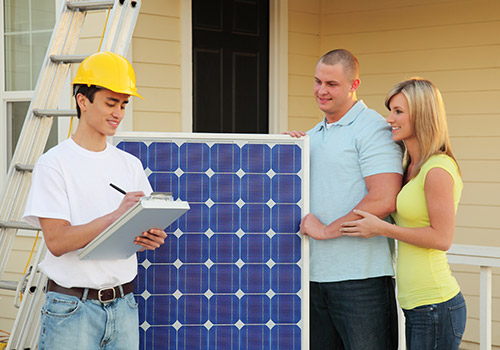
3. Follow up with the installer who will meet with you to confirm your needs, assess the installation site and provide you with a quote.

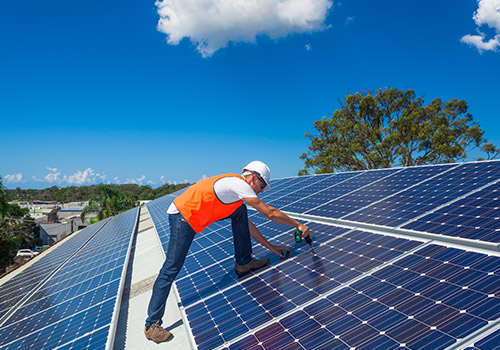
4. Decide whether to proceed with the installer. If you do, the installer will supply the equipment, perform the installation, and help you...
- Contact your local electricity provider and apply for a building permit.
- Arrange an Electrical Safety Authority (ESA) inspection. This inspection provides you with a record that all electrical work on your home complies with the requirements defined in the Ontario Electrical Safety Code
- Close the building permit to confirm the work done complies with all local standards
- Apply for the provincial rebate. (ADD WHEN AVAILABLE)
5. Groupsolar will contact you after the installation is complete to make sure you’re completely satisfied. Your response will help us continue to recommend only the very best installers.
Is your home right for solar?
Here are the factors that determine how effective solar panels will be. Your GroupSolar installer will assess:

1. The exposure. South is best but east and west facing roofs can still be very effective.

2. The pitch of your roof. 25 to 50 degrees is considered optimal.

3. Shade considerations including trees, chimneys, neighbouring roofs and plumbing stacks.
4. Available unobstructed roof space. 300 to 1,200 square feet is recommended.
Why solar?
Saving on solar equipment and installation is just the beginning.
Save on your utility bill
The solar energy you produce can reduce your utility bill by 50-100%.
With what’s called a “behind the meter” system, you have the security of staying connected to the grid while you significantly reduce the amount of electricity you draw from that grid.
Here’s how it works:
When you’re producing more electricity than you’re using, there are two ways you save –
- There’s no electricity coming in from the grid so you’re not paying utility company electricity charges (other charges such as “delivery” still apply)
- The excess power you’re creating feeds back into the grid and you receive credits against future electricity you take from the grid, which reduces your utility bills in future months.
When you’re producing less power than you’re using, you still reduce the amount of electricity you would have taken from the grid and that reduces the electricity charges on your utility bill.
Municipalities can now create “Local Improvement Charge” programs, like the City of Toronto’s Home Energy Loans Program (HELP). These programs enable homeowners to install solar and other technologies like battery storage, with no up front costs. The expense is repaid through property taxes, and the annual property tax increase is offset by energy bill savings. This is an especially good option in cases where a home-owner’s cash flow is tight, or if the homeowner isn’t sure they will be in the home for the full lifespan of the solar installation.
Increase your home’s value
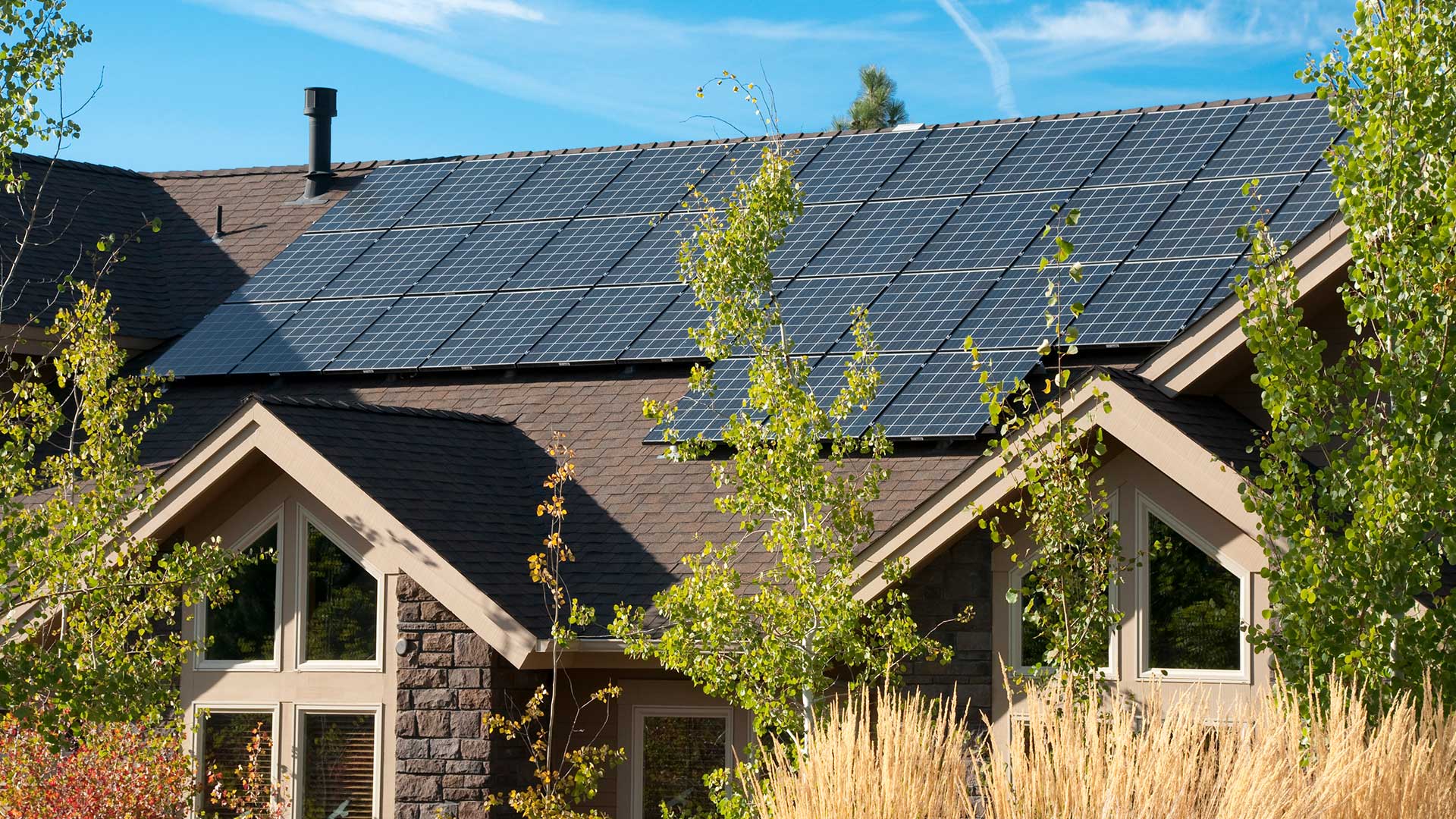
According to this study U.S. study, home resale value can increase $3 to $4 for each solar watt installed. So a standard 5kW system could increase your home’s value by thousands of dollars. The geographic location and the size of your solar installation play a role in determining the exact increase in property value.
Become independent
Solar also gives you the option of going completely off grid and never paying a utility bill again. For some people, this is a lifestyle choice. For others, it’s an economical solution when building a new home that’s a significant distance from existing power lines.
Go green
Gas fired and nuclear power plants still generate over 60% of Ontario’s power. Solar can help combat pollution and, together with the other forms of renewable energy generation, reduce Ontario’s need to invest in new power plants, costly transmission lines and other forms of electricity infrastructure.